Refractive Errors: Clarity at Every Distance
Refractive errors are the most common reason people seek eye care. They occur when the shape of your eye prevents light from focusing directly on the retina, resulting in blurred vision. At Aditya Eye and Laser Centre, we specialize in diagnosing and permanently correcting these vision hurdles using the latest laser technology.
Types of Refractive Errors
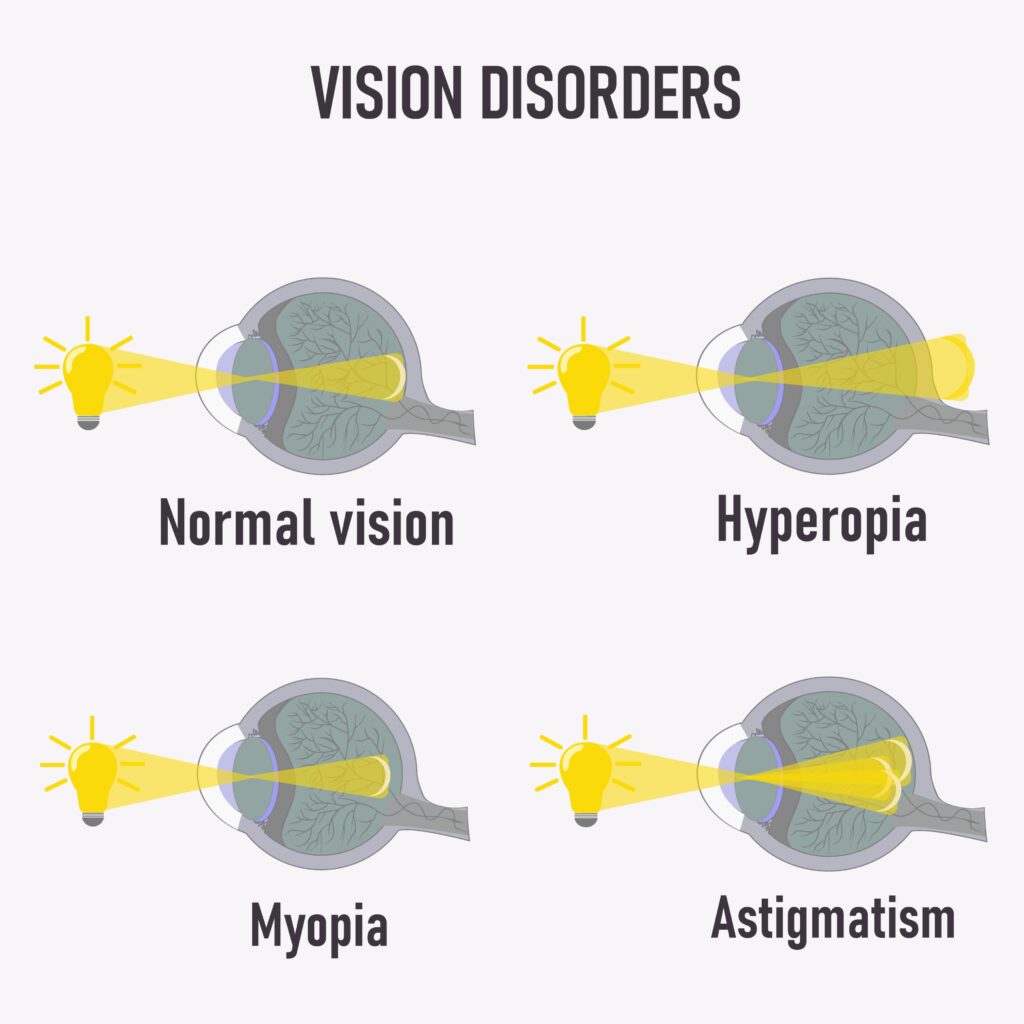
Myopia (Nearsightedness): Objects up close are clear, but distant objects appear blurry. This often happens when the eyeball is too long or the cornea is too curved.
Hyperopia (Farsightedness): Distant objects are usually clear, but close-up tasks like reading can be difficult and cause eye strain. This occurs when the eyeball is too short.
Astigmatism: Vision is blurred or distorted at all distances. This is caused by an irregularly shaped cornea (shaped more like a football than a basketball).
Presbyopia: An age-related condition (usually starting after age 40) where the eye’s natural lens loses flexibility, making it hard to focus on nearby objects or small print.
Common Symptoms
If you experience any of the following, you may have an uncorrected refractive error:
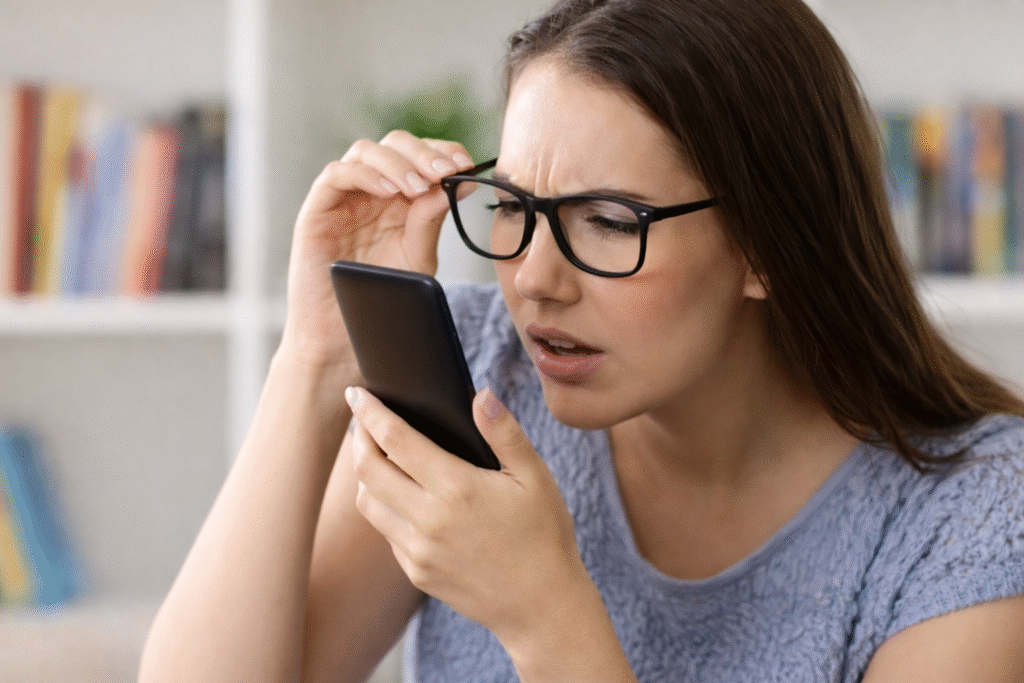
Blurred Vision: At a distance, up close, or both.
Squinting: Constantly narrowing your eyes to see clearly.
Eye Strain: A tired or “heavy” feeling in the eyes after visual tasks.
Headaches: Frequent tension headaches, especially after reading or computer use.
Hazy Vision: A general lack of sharpness in your daily sight.
Vision Correction at Aditya Eye and Laser Centre
We believe that no one should have to rely solely on heavy glasses if they don’t want to. Our center offers a range of personalized solutions to help you achieve 20/20 vision:
Precision Refraction: Accurate, computer-aided eye exams to find your perfect prescription.
Advanced Laser Procedures: Permanent surgical solutions to reshape the cornea and eliminate the need for glasses.
Premium Intraocular Lenses (IOLs): Ideal for those with high prescriptions or early cataracts.
Specialized Contact Lens Fitting: For patients who prefer a non-surgical alternative to glasses.
Ready to See Clearly?
Refractive errors shouldn’t hold you back from your daily activities. Whether you are a student, a working professional, or enjoying retirement, we have the expertise to sharpen your world.
Patient Tip: Children often don’t realize their vision is blurry. We recommend regular screenings for students to ensure refractive errors don’t interfere with their learning and development.
Understanding Refractive Errors: Causes, Types, and Vision Correction
Clear vision is something many of us take for granted until objects begin to appear blurry or distorted. When the eye cannot focus light properly onto the retina, the resulting vision problems are medically categorized as Refractive Errors. These are the most common eye disorders worldwide and affect people of all ages, from young children to seniors.
How the Eye Works
To see clearly, light rays must pass through the cornea and the lens. These two structures work together to bend (refract) the light so it lands precisely on the retina at the back of the eye. If the shape of your eye is too long, too short, or the cornea is irregularly curved, the light doesn’t hit the right spot. This mechanical imperfection is what leads to the development of Refractive Errors.
The Four Main Types
There are four primary conditions that fall under this category:
Myopia (Nearsightedness): You can see close objects clearly, but distant objects look blurry. This happens when the eyeball is too long.
Hyperopia (Farsightedness): Distant objects are clear, but close-up work causes strain or blurriness. This occurs when the eyeball is too short.
Astigmatism: This causes distorted or blurred vision at all distances due to an irregularly shaped cornea (shaped like a football instead of a basketball).
Presbyopia: An age-related condition where the lens loses flexibility, making it hard to focus on reading materials.
Recognizing the Symptoms
Many people live with undiagnosed Refractive Errors without realizing their vision could be sharper. Common signs include:
Frequent headaches or eye strain.
Squinting to see road signs or the television.
Double vision or “halos” around bright lights at night.
Hazy or blurred vision that doesn’t clear with blinking.
Diagnosis and Modern Solutions
The good news is that these conditions are easily detectable through a comprehensive eye exam. An optometrist or ophthalmologist uses various tests, such as a phoropter or an automated refractor, to measure the exact prescription needed. Once diagnosed, Refractive Errors can be managed effectively through several methods:
Eyeglasses: The simplest and safest way to correct vision.
Contact Lenses: Provide a wider field of vision and are preferred by active individuals.
Refractive Surgery: Procedures like LASIK use lasers to reshape the cornea permanently, often eliminating the need for glasses.
Conclusion
Maintaining regular eye check-ups is essential for eye health, especially since vision can change gradually over time. Whether you choose glasses, contacts, or surgery, correcting Refractive Errors significantly improves your quality of life, productivity, and safety. If you find yourself squinting or struggling to read, schedule an eye exam to ensure your world stays in focus.